
‘We Have 147 Million Challenges in India’
Mansur Dalal, founder and chairman emeritus of the Association of Senior Living India, and the immediate past chair of the Commonwealth Association for the Ageing (CommonAge) and a member of the Global Ageing Network board of directors, has been making an impact in the ageing services sector since 1997, and is continuing to shine a light on the needs of the ageing population in India, which at 147 million, is the country with the largest number of seniors in the world.
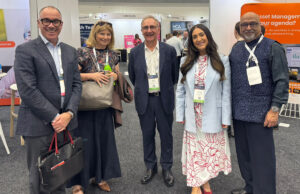
In a recent conversation with the Global Ageing Network, Dalal offered insights on the current challenges in his country, where he sees opportunities, especially around the development of a workforce to care for older adults, and how he plans to address the issues of the ageing sector in a new way.
Needed: A Ministry for Seniors
“Our challenges in India are in direct proportions to our numbers— we have 147 million challenges. It’s four times the population of Canada, perhaps five times. And I don’t even know how many times the population of New Zealand. I’m bringing these two countries up because both have a ministry for seniors. We need a ministry for seniors in India, which we don’t have at the moment. We need a single point where we can address insurance challenges, health care challenges, the financial implications—now we have to go to multiple channels to address our concerns.”
Infrastructure and Costs
“CommonAge started the first age-friendly city (part of the World Health Organization’s Global Network for Age-Friendly Cities and Communities) in Kochi, in South India in the Kerala State, in 2023.
In general, in India, the infrastructure is not senior citizen friendly, nor are the amenities. [Buses in India don’t have steps that come down to accommodate wheelchairs, ramps are not available]. We also have a ‘no pension challenge.’ There are seniors who are not covered by a pension at all. For seniors who are below the poverty line, there is a pension of 3,000 rupees per month, which if I were to convert it, is 30 US dollars a month.
We don’t have very robust non-medical insurance, and we also have GST (Goods and Services Tax) applied to any services we give to seniors, and that’s a big hurdle for us. If I were to run an assisted living center and provide quasi medical services, normal or special food for seniors, and so forth, everything would have a GST component—which increases the price point, while there is no pension plan and no governmental support. It’s all of these compounded scenarios, and we are trying to do the best we can to help make life a little easier for seniors.”
Models of Community Caregiving and ELDER Care
“There are 70% of older adults in India who live with their adult children. The children are there to look after them, but there are challenges like caregiver burden, burnout, juggling a demanding career along with looking after the parent. It’s unpaid work, of course done with a lot of empathy and care, but it’s still unpaid.
This is a rapidly changing world and young adults have career choices—they can’t be geographically chained to a particular location, they want to have lateral movement. Parents encourage them to go on and have their own lives—that was not always the case.
The children have traveled, they have seen the world and they want to move out. However, the children would like to see a robust system in place for their parents to be looked after, be it primary care, assisted care or senior living.
In India, we are looking at models of community caregiving. We are looking at home care which has picked up extremely well due to the market demand. There are about 500,000 caregivers coming into this stream every year but people don’t stay on, there is a lot of attrition.
The Global Ageing Network is trying to initiate an ethical migration of the work force [the fair, transparent and rights-based international recruitment of labor, as defined by the World Health Organization]. I’ve come up with an acronym for that called ELDER Care: E means to educate the caregiver, L means the candidate would have to learn in a community to get hands-on experience, and D to demonstrate what has been learned by the way of a test or assessment then E is for earn, because there is a huge demand for caregivers overseas. More importantly is R—they have to return to their country of origin and give back by providing elder care— this is so their country of origin is not short-staffed or short changed.
There would be some sort of pathway created by which they can get a work permit for a particular period of months or years and then come back with enhanced skills into a growing industry in India; this would give them a higher career path. We need not only frontline workers, but managers and administrators as well.”
His Inspiration for Contributing to the Ageing Services Sector
“I am an architect by profession—I specialized in hospitals, tissue culture laboratories, and very specialized projects. When I look back (at why I came into this work), I go back to my grandfather who did his PhD at 89 at St. Xavier’s College in Mumbai. He lectured until he was 94—he was an archaeologist and a historian. He was a hero to me and I was very close to him. When he was 94, he fell and broke his hip bone. He wouldn’t allow us to take care of him … he didn’t want the family to be troubled. He was a very strong-willed man. He stopped eating and drinking and in seven days, he passed. It jolted me big time. It was 1997 and I was on a vertical curve in my career, but I decided to tour the world and look at senior homes—I wanted to know what we could create here in India so people like my grandfather, who have so much to give the world, could be looked after and not feel badly about it.
We created the first senior home, Golden Nest, in my home city, Pune, in 2003 and it is still a benchmark for other senior home models. We had (many amenities) and I thought this would have been a place where my grandfather would have been happy with people who were taking care of him, and other people like him.
In 2011, I voluntarily closed my architectural practice and vacated my own office building, Dalal House, and took on this work (in the ageing sector) pro-bono.”
Steps to Improve Ageing Services in India
“I would like to see India create more career options for caregivers because the critical thing I see today is the lack of caregivers, which could throttle the industry if not addressed. The second thing is that we have to shorten the curve and leapfrog the evolution curve. If we do not do that and do not learn from our mistakes, and there are some mistakes that have been made in this industry by other countries, then we will be in trouble.
One of the ways to shorten the curve is to have a continuum of care. Today we are more focused on creating more independent and senior living communities. After 15 or 18 years, which is a normal cycle of a senior and independent living community where adults have come in at 65 or 70, [as they grow older] they are requiring care and there is no collaborative care component attached. Out of 1,100 senior living communities in India today, only 15% provide a continuum of care. The balance of the 85% of elders in senior living communities will require care in the future. And India now has 28 million elders with dementia—think of that number.”
Belonging to the Global Ageing Network
“I first learned about the Global Ageing Network when Vic (Vic Rayner, Global Ageing Network board chair) invited me to speak on ethical migration in Glasgow, Scotland in 2023. After that, I was invited to join the Global Ageing Network as a director—they did not have anyone from this part of the world, and being from a place with the largest population of seniors in the world, here I am.
It’s been an opportunity to learn and understand more about everything happening in the world. When we have our board meetings, we give an update on our countries, our regions and what we are doing. This give us insight into what sort of policies are being done, take some hints from there, then push it to our countries and say ‘this can be done.’”
It’s been an opportunity to learn and understand more about everything happening in the world. When we have our board meetings, we give an update on our countries, our regions and what we are doing. This give us insight into what sort of policies are being done, take some hints from there, then push it to our countries and say ‘this can be done.’
Recently Added

September 21, 2026
Applications Open for the 2026/2027 Global Ageing Network Leadership Program
August 24, 2026