Promoting Healthy Ageing Across the Americas
Strengthening healthy ageing, as well as care and support for older people, is a global priority, and the Pan American Health Organization (PAHO) is one of many organizations around the world implementing strategic initiatives to realize this vital goal.
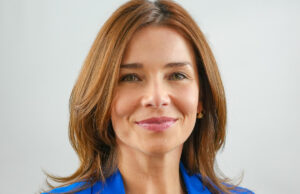
In a recent conversation with the Global Ageing Network, Dr. Patricia Morsch, physical therapist, doctor in biomedical gerontology, public health specialist and healthy ageing advisor at PAHO, spoke on a range of subjects including the work of providing long-term care in the Americas and how a life course approach could ultimately lead to a healthier older population.
Progress on the Decade of Healthy Ageing
Morsch provided context around the progress of the Decade of Healthy Ageing (2021-30) which was declared by the United Nations General Assembly in December 2020, following its approval in the 2020 World Health Assembly as a continuation of the World Health strategy on ageing and health (2016 to 2019).
“The Decade was a proposal [during] the World Health Assembly in 2020 to bring different perspectives to healthy ageing based on what had been done, but also what needed to be strengthened in the following years,” said Morsch. “This brings different actors and agencies, not just WHO and PAHO; WHO leads this work, but as a regional office, PAHO supports implementation and monitoring within the Regions of the Americas.” According to Morsch, PAHO’s work with member states includes providing technical cooperation, taking action on everything related to a rights-based approach, integrated care, long-term care, age friendly environments as well as on combatting ageism.
In May 2026, the Draft of Global Standards for Long-Term Care, part of the Decade of Healthy Aging initiative, was launched by WHO. “It aims to support planning, delivery, monitoring, and continuous improvement of long-term care for older people that are person-centered, rights-based, integrated, equitable and of high quality,” she said.
Comments on the draft will be accepted through 30 October 2026. “We expect different stakeholders to provide their comments on the various areas that we are proposing as standards, as well as [comment on] the indicator for quality long-term care proposed within each of the areas,” Morsch said. “Different sectors are leading long-term care. There are also different actors participating—family caregivers, people who receive care, and organizations that provide the services. Listening to all of them is very important to help shape long-term care in the different countries with different scenarios around the world. That is why the consultation is open until October—we want to hear from everybody and to have standards that would be feasible to achieve and implement.”
Strategic Planning
Long-term care strategic plans will look closely at care for older adults with a variety of care needs, including those associated with Alzheimer’s and dementia, Parkinson’s disease and other neurological and/or mental health conditions; according to PAHO, “the prevalence of severe functional limitations is increasing” due to non-communicable diseases and losses in mental and physical capacities. “This is a very critical issue to consider because with the ageing population, we are also seeing a change in the epidemiological profile in the region,” Morsch said.
She continued, “When we talk about healthy ageing and adapting our systems to an ageing society, we have to enable our health systems for early identification of losses in capacities, including cognitive decline and identifying Alzheimer’s disease or other dementias, as well as other chronic conditions. This type of care is still very specialized, so sometimes people lack access to these services, and it can take a long time to receive the support and care they need—one approach would center on early diagnosis and treatment.”
When we talk about healthy ageing and adapting our systems to an ageing society, we have to enable our health systems for early identification of losses in capacities, identifying Alzheimer’s disease or other dementias, as well as other chronic conditions. This type of care is still very specialized, so sometimes people lack access to these services and it can take a long time to receive the support and care they need—one approach would center on early diagnosis and treatment.
Different Approaches to Health Systems
With a focus on the future of long-term care demands, Morsch said, it’s also important to develop prevention strategies to allow people to live well and remain healthy for as long as possible.
“Considering healthier trajectories across the life course is critical. Understanding that the actions [we] take today could promote better physical and cognitive health in the future,” said Morsch, adding that, in July, WHO released updated guidelines on reducing the risk of cognitive decline and dementia, indicating that 45% of risk could be prevented or delayed as the result of healthier lifelong habits.
Considering long-term care, countries across the Americas are developing their systems in different ways.
“Uruguay has had a care system since 2015, including services like caregiving, capacity building for family members and for professionals. They have the availability for professional care providers to offer home care, for a stipend,” she said. “On the other hand, we have countries like Chile and Brazil that just published their care policies maybe two years ago and are structuring their care system right now.”
Costa Rica has a very specific model with a focus on long-term care for older adults. “They created an evaluation [tool] and depending on the level of severity for the individual, they have different packages of long-term care services,” said Morsch.
 When asked how the Americas are building an ageing services workforce, Morsch said, “That’s a great challenge that we have in the region,” noting that geriatrician positions often remain unfilled because relatively few professionals choose to enter the specialty. “I think one approach could be increasing the visibility and benefits associated with these professions,” she said. “For that, it’s crucial we combat ageism overall in society as I think that hinders interest in working with older people.”
Changing the narrative around ageing so that working in the field would be seen as an opportunity is essential, particularly as the health and care workforce itself is ageing, Morsch said. “It’s worth considering opportunities for a multi-generational workforce that can lead to a sharing of skills between the older people and the younger generations coming into the field, who may have new ideas and more technological approaches.”
Morsch values the connections made between PAHO and the Global Ageing Network. “Even though the regions of the world are unique in their needs, the infrastructures they have for health, health care, long-term care—a lot of the challenges are similar,” she said. “Building these opportunities of sharing and learning from others is very important in the global work we all do, considering the challenges we have today and the difficulties we are experiencing.”
Recently Added

September 21, 2026
Applications Open for the 2026/2027 Global Ageing Network Leadership Program
August 24, 2026