
Claudia Mahler: An Advocate for the Rights of Older Adults
Claudia Mahler serves as the UN Independent Expert on the enjoyment of all human rights by older persons for the United Nations Human Rights Council, a role she’s held since 2020. She is a senior researcher in the field of economic, social and cultural rights for the German Institute of Human Rights.
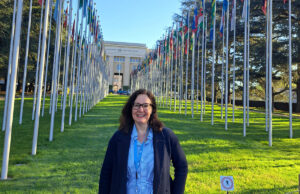
Mahler, who is based in Austria, recently traveled to Geneva, Switzerland for the latest session of the drafting of the UN Convention on the Rights of Older Persons. In advance of the session, she spoke to the Global Ageing Network and addressed the topic of the UN Convention.
“One of the big issues we will work on is ageism and age discrimination,” said Mahler. “Also, what kind of realistic approach do we need for the labor market to include older adults in the overall economy? What do older people bring to the economy and what does it cost them not to include them?”
At 2023’s Global Ageing Network conference in Glasgow, Scotland, Mahler delivered a presentation focused on how older adults are an underappreciated resource for the economy and in the recent interview, Mahler said she believes its root cause is their invisibility.
“When we are talking about inclusion in the labour market, for example, if they are out of the market, almost nobody is hiring them anymore,” she said. “What we also know from a couple of services and studies is that mixed teams (older and young adults) are the most productive, but we don’t see them very often. This isn’t new; I heard about [intergenerational] teams when I started this work almost 20 years ago.”
When considering older adults as consumers, this is another area where Mahler says their expertise isn’t as valued as it could be. “[They] are very often not considered as consumers for all the products,” she said. “They are seen as consumers for a very specific part of product design, but not very often included in studies and the development of products.” She adds the digital world is a crucial place for all ages to be included in design and development.
“We would get much better universal design than we have right now. Most of the older people are not digital natives, so they are the best people to include to see if [a design] really works for everybody, but they just aren’t included,” Mahler noted.
Another topic of interest to Mahler, and one she also spoke about in Glasgow, focuses on continuing education for older adults. Keeping in mind the diversity of the older population, she said education, work and retirement are top-of-mind—the key question is what each individual wants to pursue.
“Most of them really want to start something new, but what I see on a regular basis is that only entrepreneurship is the road to doing something new,” she said. “If you’re part of a company, you’re not able to change after 50, and if you want to change, you might need some kind of upskilling. However, what we often see is that a lot of companies are not really interested in providing that kind of training to older adults – and sometimes, training isn’t suited for them.”
Upskilling can be valuable for many, but the avenue she believes is more viable centers on entrepreneurship, which may be a better “lived reality” for older workers, she said.
Another topic Mahler addressed is ageism. “I was traveling through Bangladesh, walking through the market. I saw an older man, in his 70s, who knew I was there for an official visit,” she said. “He said to me, ‘You know, the only thing I would really like is for us to be visible again. Nobody wants to have us in the loop; we have a lot to give and we want to give it. We want to give back to the community.’”
As Mahler later learned, the older adults in that community in Bangladesh started a club where they could meet to find “new ideas, new solutions and support each other, which was kind of a starting point for them,” she said.

Acknowledging the prevalence of negative stereotypes and age discrimination directed towards older adults, which she noted is “a worldwide issue,” Mahler said, “All of these negative stereotypes should be proved, but they are not – many of these studies come up with totally different results [about why older adults make good employees]. So when it comes to why older adults aren’t hired, I think ageism is the #1 aspect, but the other is cost,” since the salaries for older adults, based on experience, would be higher than those of younger workers.
All of these negative stereotypes should be proved, but they are not – many of these studies come up with totally different results [about why older adults make good employees]. So when it comes to why older adults aren’t hired, I think ageism is the #1 aspect, but the other is cost.
Mahler also mentioned health care and older adults, specifically the UN Convention. “Most of the states are trying to reduce their support in regard to health, and most of the decrease [involves] the prevention aspect of health care,” she said. “We can argue that if prevention does not work, the costs are much higher in regard to care and support in later years.”
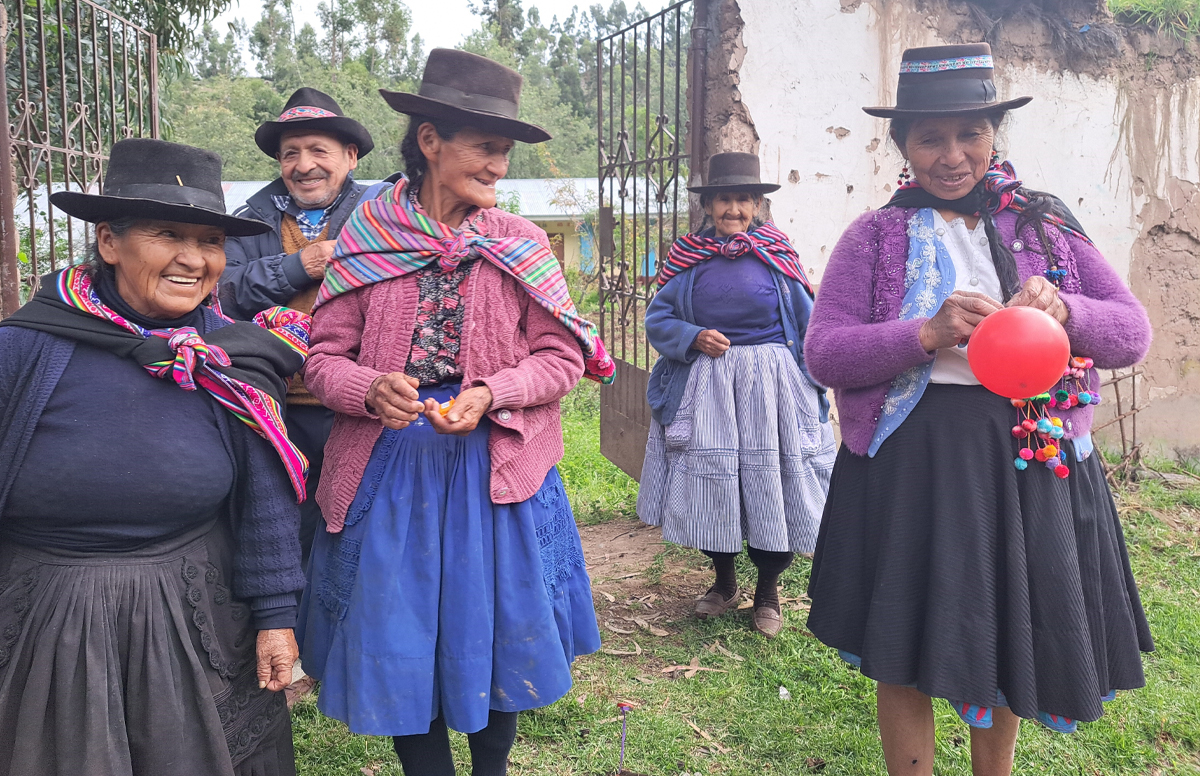
Mahler noted that women are the least visible in discussions about the right to health care. “For me, it’s kind of mind-blowing that we have so many women at the table, but all the women are not visible – it’s in the UN, it’s on the national level, it’s on the regional level.” She told a story about a group of women in an indigenous community in Peru who took it upon themselves to learn to read and write. “They wanted to have a seat at the table in their district to ensure that they got support and dignity for the lost people in the civil war,” she said. “To me, this is such a powerful statement. They took the steps they needed, even though they were in their 60s and illiterate, in a really rural area, and managed to go to the capital and bring what they wanted to bring to the table. To me, this showed the power of imagination.”
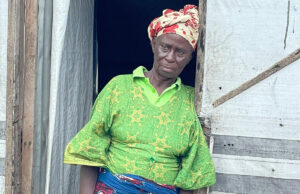
Spreading the word throughout the Global Ageing Network can have a positive impact on the UN Convention drafting, she said. “We see that there is just a small part of the older population included in the drafting work. What we are missing is a lot of voices from the Global South. They are not at the table – their governments are not at the table.”
Mahler said she believes there will be an intersessional period where additional questions will be disseminated regarding the Rights of Older Persons and she encourages Global Ageing Network members to respond; after the October 2026 session which is the second one, the third will be in July 2027 and the fourth in November 2027.
“I think it would be really good to include more voices from different parts of the world,” she said. “To ensure that this legally binding instrument is really fit for purpose because we only have this one chance to do it right.”
Recently Added
October 20, 2026
Looking at Long-Term Care Around the World

September 21, 2026