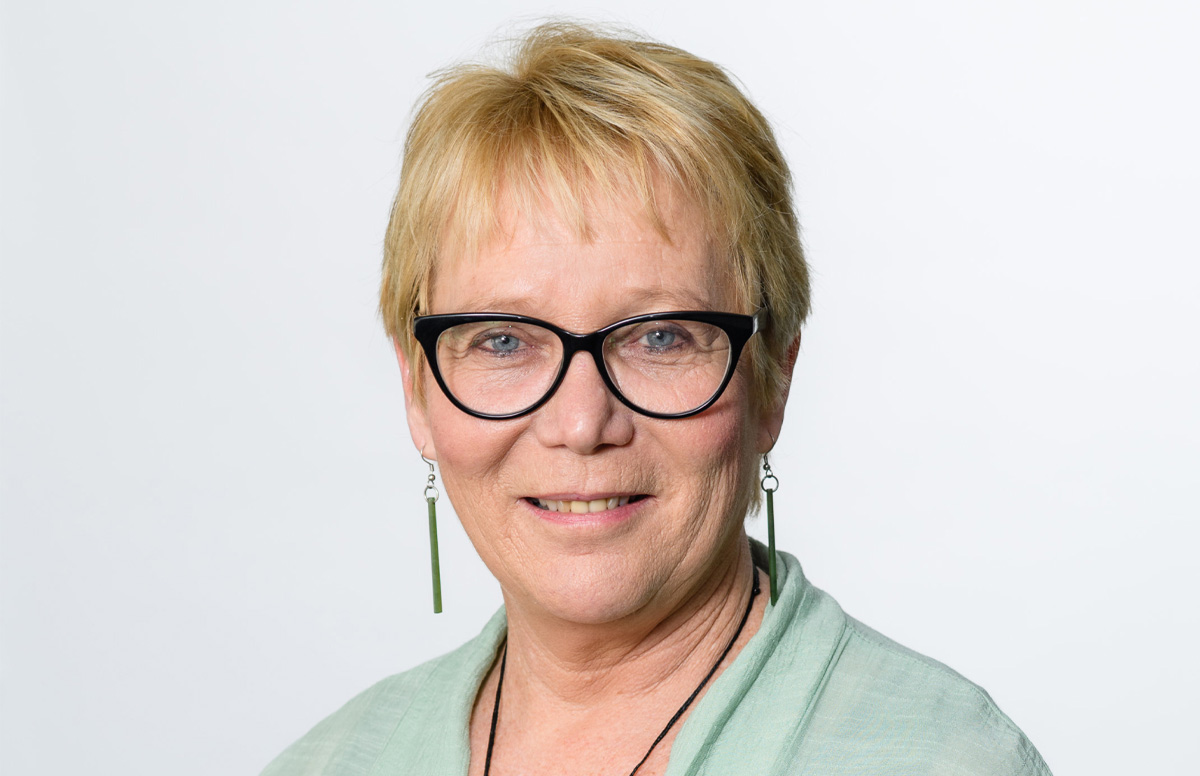
In May 2024, The Hon. Tracey Martin was appointed to serve as the CEO of Aged Care Association (ACA) New Zealand following a term in the New Zealand Parliament from 2011 to 2020. As a member of Parliament, she served as the Minister of Seniors, Minister for Children, Minister of Internal Affairs and as the Associate Minister of Education. Following her service in Parliament, Martin was chair of the New Zealand Qualifications Authority and a board member at NZ Transport Agency (Waka Kotahi).
Coming to ACA New Zealand, she brought not only experience in public service, but an interest in improving life for aging New Zealanders in urban and rural settings. Similarly to other countries around the world, the population of older adults in New Zealand is increasing—in 2023, 16.6% of the country’s population, numbering 828,000, was over 65. That number is projected to reach 1 million by 2028 and close to 2 million by 2073.
Recently, Martin spoke about her role and how she’s intent on having ACA New Zealand lead conversations about much-needed reform in the ageing services sector: “I’d like to see our sector leading it and not having it done to us.”
Aged Care Association New Zealand is new to the Global Ageing Network, having joined earlier this year. What are you hoping to learn from other ageing services sectors around the world?
I was actually invited into the Global Ageing Network because I met Judy Martin [a Global Ageing Network board member from Australia] at Ageing Australia. Australia has just gone through major governmental reforms with regard to the funding and delivery models of care services to seniors. New Zealand needs to do reform so I’ve spent a lot of time in Australia in the past two years looking at their reforms, talking to members of their sector, finding the things that we should actually be implementing in New Zealand, and also the things we shouldn’t.
I was recently at Ageing Asia in Singapore— what was really useful was to see where other nations are at since we are all on the same journey, ultimately. The language they are using around [ageing] is really useful, too. Here in New Zealand, we talk about our aging population as a problem. In Singapore, they are talking about a population with longevity as a plus and how we can see the opportunity that gives us.
There are parts of the Singaporean system that are 30 years behind New Zealand. That was really interesting because sometimes we beat ourselves up that we’re not that great. Then there are parts that are 20 years advanced with the way they use technology. That’s what I believe is the benefit of all of us coming to see each other and talk with each other. We can be learning from each other as to how different models work for what is a mutual challenge.
Describe the work of the Aged Care Ministerial Advisory Group. This was set up in late 2025 by the Associate Health Minister Casey Costello at the request of ACA New Zealand. What are the objectives you are hoping this group can achieve?
We had been lobbying the government to do some planning about reform. There was no planning at all. [Note: the advisory group was planning to have interim recommendations in mid-May and final recommendations to the Minister by June.] I want them to recommend an infrastructure grant fund specifically for aged residential care. We don’t have enough residential care beds – we’re 12,000 beds short. And those beds that we need are for those who don’t have money. At the moment, the part of the sector that is doing okay is the one catering to people who have wealth. We need an infrastructure grant so that we can look after our citizenry with no money and also those who live in rural and regional areas. It’s a basic belief structure of ours that you should be able to age in place, which means that your community is your place. You might need residential care but you shouldn’t have to leave the community that you’ve lived and loved in.
One of the large providers in this country is Presbyterian Support Services. They take all those New Zealanders that others won’t take. A lot of New Zealanders forget prisoners get old, drug addicts get old–Presbyterian Support Services steps into that place, but because the funding model is broken, they have about $10 million dollars worth of deferred maintenance on their buildings. If they can’t get access to an infrastructure grant fund to help with that maintenance, they’ll have to close some of their facilities which means there will be nowhere for those people to go.
You are just starting your third year as the CEO of ACA New Zealand. Since you came on board, close to 100% of residential care providers in New Zealand have joined the organization. To what do you attribute that growth and what would you like to see ACA achieve in the next two or three years?
On one level, I attribute it to timing. There was another small group of individuals [doing the work], but they were tired. I reached out, created relationships with them and said “come in with us.” One of their members is on our board.
There is power in me going to see the politicians and saying I represent pretty much 100% [of providers], you need to talk to me. As of the beginning of next year, we should be in the middle of major reform—I’d like to see our sector leading it and not having it done to us, partnering with government agencies for this reform. That’s a major goal.
We want to be influencing immigration policy, influencing workforce planning. There is no workforce planning in this country for the aged care sector. We are about to start doing it with the unions because the government is not doing it. Again, it’s all about us leading and getting the government to adopt what we’ve already decided.
I also want to see our association be able to provide more services to our members, particularly our rural, regional members— things like bulk buying so we can draw down prices on what they need, signing up more food providers, affiliate members, who can give our members services at a better price.
[My work at Aged Care Association New Zealand] is an extension of the work I did as the Minister for Seniors—this is me finishing something that I started. There’s more opportunity to create change in this role than there was as Minister, and that’s because of the parameters you have to work in as Minister. Now I can criticize freely, I can endorse freely. I’m a great believer in future planning.