
Future-Ready Care Pathways for Later Life: Housing, Financial Well-Being, and Smarter Support Solutions
On 3 February, global leaders, innovators and practitioners gathered on a webinar to explore how to build future-ready care pathways for later life. The discussion made clear that while international frameworks are essential, real progress depends on integrating housing, finance, technology, culture, and community systems.
Amal Abou Rafeh, chief of the Programme on Ageing at the United Nations Department of Economic and Social Affairs, grounded the conversation in global commitments. She reflected on the enduring significance of the Madrid International Plan of Action on Ageing and noted that, after 13 years of discussion, drafting has begun in Geneva on a legal instrument toward a Convention on the Rights of Older Persons. Such a convention would set international standards, but implementation remains uneven. Ageing, she stressed, is not the problem; the failure to plan for longevity is.
H.E. Abdulaziz Alwasil, permanent representative of the Kingdom of Saudi Arabia to the United Nations in New York and chair of the 25 Member States’ Group of Friends of Older Persons, underscored the urgency. With fewer than 46 months remaining to achieve the Sustainable Development Goals and only 17% currently on track, Alwasil reminded participants that nearly a quarter of the goals directly affect older persons’ participation and well-being. Yet long-term care systems have not kept pace with increased longevity. Families face pressures from migration and shifting labour markets, women continue to provide most paid and unpaid care, and the global shortfall of care workers stands at 13.6 million. Addressing these gaps requires investment in affordable housing, social protection, lifelong learning, digital inclusion and community-based services.
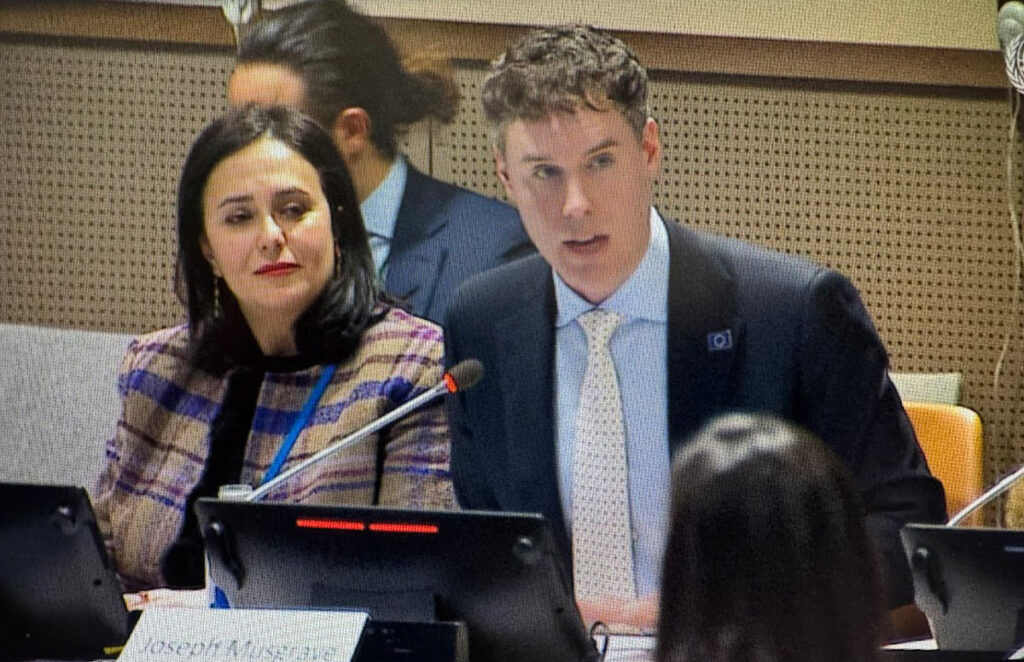
Moderator Joseph Musgrave, CEO of Home and Community Care Ireland and a Global Ageing Network board member, challenged prevailing narratives. While child-focused systems emphasize potential and disability frameworks center empowerment and autonomy, care for older persons is too often framed as management rather than fulfillment.
In Vancouver, Peeter Wesik, chair of Wesgroup, described transforming the River District from an industrial site into an intergenerational community. The project allocates 20% of new housing as affordable, donates 25 acres of parkland to the city and plans thousands of market and non-market homes. The model integrates commercial space, public infrastructure and sustained collaboration with government and residents—demonstrating that ageing in place depends on whole communities, not just residences.
Financial resilience emerged as another essential pillar. Ana Mahony, founder of Addition Wealth, noted that more than 80% of older Americans are financially unprepared for retirement, as long-term care costs rise sharply. She argued that technology can democratize access to high-quality financial advice through personalized tools that project future health, housing and care costs. Employers, educators and financial institutions must collaborate to build resilience well before retirement.
Himanshu Rath, founder of the Agewell Foundation in India, emphasized that innovation must prioritize the most vulnerable. India is home to more than 155 million older persons, with approximately 20 million joining their ranks each year, and 65–70% depending on others for daily food without adequate financial, legal or social support. Hybrid human-technology systems, home retrofitting, and intergenerational volunteer networks can extend reach, but scaling must intentionally address insecurity faced by millions globally.
Technology’s connective role was reinforced by Shainoor Khoja, a systems innovator with experience in fragile and conflict settings. In Afghanistan, her team expanded connectivity across 236 towns and villages, layering telemedicine, e-learning, clean water systems, microloans, and mental health supports into an integrated digital ecosystem. By coordinating care, integrating sensors, and nudging early intervention, such platforms address the social determinants responsible for most health outcomes. Technology, she emphasized, enables a circle of care rather than replacing it.
Cultural leadership also shapes outcomes. Al Anood Al Hashemi, vice president of culture and impact at Dubai Holding Entertainment, described embedding accessibility across large service environments through staff training, inclusive communication and expanded recreational spaces. Reflecting a national shift in language from “disability” to “people of determination,” her organization refers to older adults as “senior leaders,” reinforcing dignity through culture as well as policy.
Across regions and sectors, examples converged on a shared conclusion: legal standards, community-rooted housing, financial security, inclusive technology, and cultural commitment must operate together. Future-ready care pathways require coordinated investment and sustained collaboration to ensure longer lives are supported with dignity, security, and opportunity.
Recently Added
August 24, 2026
Creating Care Models to Better Serve Canada’s Older Adults
August 13, 2026