
Global Connections in Action: Learning Across Borders to Strengthen Ageing Services
The Global Ageing Network’s mission of international collaboration in ageing services was on full display in early March, when leaders from St. Monica’s Trust, a charitable organization headquartered in Bristol, two and a half hours east of London, England, visited LeadingAge members throughout the U.S. The goal: to share insights and cross-cultural understanding on financial sustainability and innovation in aging services, with a notable exploration of life plan communities.
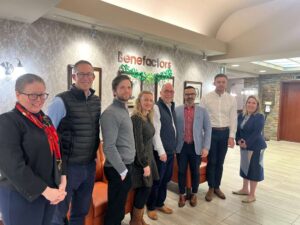
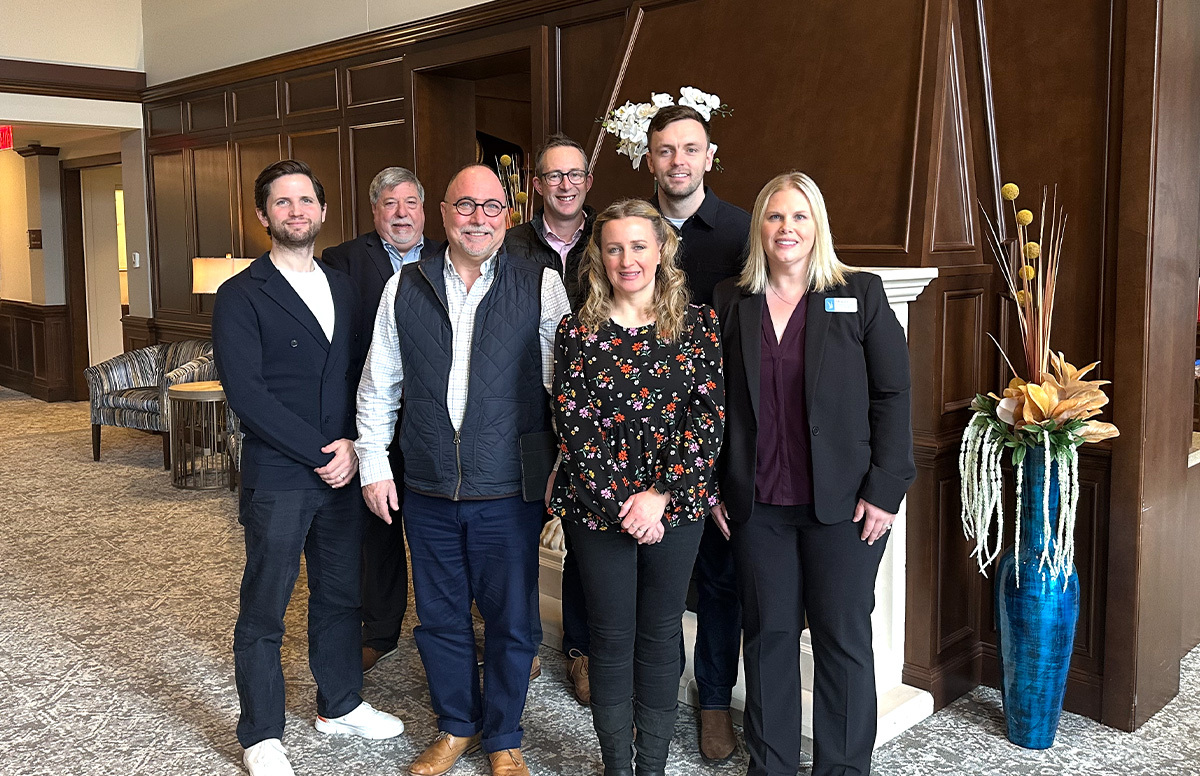
Over several days, David Williams, CEO of St. Monica’s Trust, and a small delegation of his colleagues joined hosts in towns and cities across the U.S. The ten-member tour, which included stops in Chicago and San Diego and both single and multi-site communities, yielded a deeper understanding of the shared challenges and distinct operating environments facing providers on each side of the Atlantic.
The idea for the visit originated when Williams connected with Global Ageing Network and LeadingAge members and staff members to learn more about U.S. life plan communities and how organizations navigate financial challenges.
With senior living markets evolving rapidly, U.K. providers are increasingly interested in the life plan community approach—a largely American model that has grown and evolved significantly over the past three decades. Dee Pekruhn, senior director, life plan communities & CCAH at LeadingAge, connected with state partners including Angela Schnepf, president and CEO of LeadingAge Illinois and Iowa, who organized a tour of communities in the Chicago area.
Visits to Chicago and San Diego
Over three days, the delegation visited several life plan communities, including:
- GreenFields of Geneva, a Lifespace Community
- Westminster Place, a Presbyterian Living Community
- Lutheran Home of Lutheran Life Communities
- Park Place of Elmhurst
- Montgomery Place
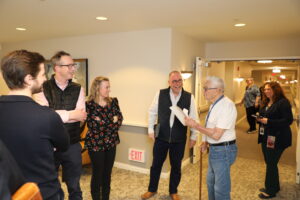
Each day included morning and afternoon tours, as well as discussions with leadership teams and staff which provided opportunities to exchange perspectives on governance, operations, and financial sustainability. Evenings brought informal networking, including dinners where U.S. and U.K. leaders engaged in candid conversation and relationship building.
“If you have the opportunity to host an international learning tour like this one, jump at it,” Schnepf encouraged. “It is the role of the association to connect people with each other for shared learning.”
As planning for the visit to Chicago progressed, Williams expressed interest in expanding the tour to include San Diego; Global Ageing Network and LeadingAge California members then scheduled site visits in the San Diego area.
Over two days, communities visited included:
- St. Paul’s Senior Services
- Covenant Living Communities and Services’ Mt. Miguel Community
- White Sands La Jolla, a Human Good Community
- Front Porch’s Casa de Mañana
Regarding the site visits, Pekruhn reflected, “The response from members was incredibly generous. Organizations opened their doors, shared their experiences candidly, and took time to connect with our international colleagues.”
Shared Challenges, Different Systems
Throughout the tour, participants explored both the similarities and differences between U.S. and international senior living models.
One key difference lies in regulation. Life plan communities, which are comprised of multiple care settings on a single campus, follow regulations set by numerous entities. Specific care settings, including nursing homes, home health and home care agencies, as well as hospices, follow regulations set and enforced, at the federal level, by the Centers for Medicare & Medicaid Services (CMS). States regulate assisted living. And life plan communities (also known as continuing care retirement communities) oversight is the responsibility of departments of insurance in most states. Currently, 41 states have statutes that regulate CCRCs and LPCs.
International providers often operate with greater flexibility. This has enabled experimentation with new community designs, service models, and resident engagement across Europe.
For example, participants discussed the innovative dementia village model pioneered at The Hogeweyk Dementia Village in Denmark, where residents live in a small-scale neighborhood designed to replicate everyday life. The concept has inspired similar ideas elsewhere, including emerging memory care initiatives in the U.S. such as the innovative memory support approach being developed by EverTrue Living, (formerly Lutheran Senior Services), which is exploring neighborhood-style memory support environments designed to foster autonomy and social interaction.
However, participants noted that replicating such models in the U.S. often comes down to economics.
During the discussions, one participant asked, “Why don’t more U.S. providers build dementia villages?” The answer was simple: capital costs. Developing entirely new community designs requires significant investment, which can be difficult in an already challenging financial environment.
A Changing Market on Both Sides of the Atlantic
Despite structural differences, the tour revealed common ground between providers in the U.S. and the U.K.
Although regulation is different between our nations, the challenges of changing resident expectations, affordability of service offering, and funding are universal and the opportunity to share ideas and models invaluable.
Recently Added

September 21, 2026
Applications Open for the 2026/2027 Global Ageing Network Leadership Program
August 24, 2026